

Editor
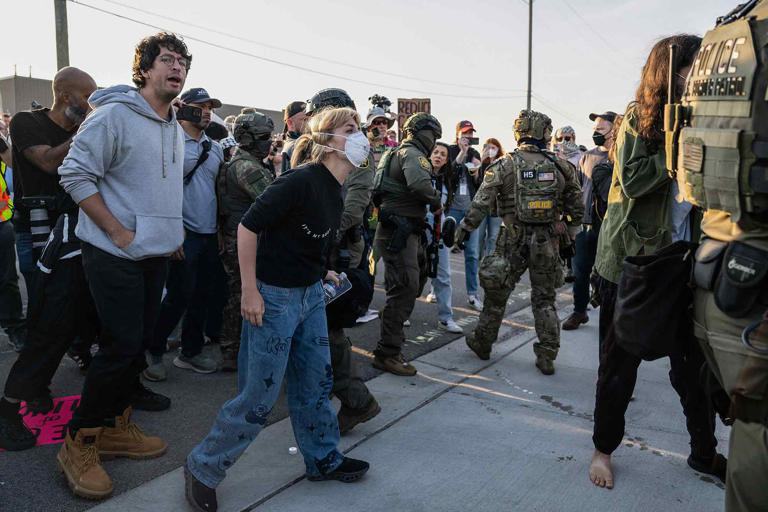
During his vacation in Portugal in October 2025, Michael Rabbitt became aware that he and five others were facing felony conspiracy charges related to their participation in a demonstration outside an ICE detention center in Broadview, IL.
Although the indictment was dismissed due to prosecutorial misconduct, his story highlights the lengths the Trump administration will go to punish Americans for protesting.
The local Democratic politician has experienced significant challenges since participating in a protest last fall, facing concerns related to job security, substantial legal debts, and the uncertainty regarding his ability to re-enter the country.
While Rabbitt and his co-defendants have successfully navigated their legal challenges, the administration continues to pursue numerous cases against individuals who have demonstrated against ICE and its practices.
A New York Times analysis of federal court filings indicates that, of the over 400 immigration-related assault cases the Justice Department has initiated since the beginning of President Donald Trump’s second term, nearly half have not resulted in successful prosecutions, as many defendants have been acquitted or had their charges dismissed.
The group known as the Broadview Six, which includes Rabbitt and his co-defendants, faced indictment for conspiracy to impede or injure an officer after demonstrators obstructed a federal agent’s vehicle from entering the detention center, during which an incident involving the word “pig” being scratched onto the vehicle occurred.
A month after the case against him was dismissed, Rabbitt had a conversation with West Suburban Journal regarding the personal, professional, and financial implications of the situation.
“There are many uncertainties surrounding the stress and personal toll this experience has taken on me—it’s hard to predict how it might affect my future, and it has certainly been demanding,” he noted.

Although the case was ultimately dropped, Rabbitt has incurred approximately $300,000 in legal expenses. To assist with his attorney fees, a GoFundMe campaign was launched.
Another concern for Rabbitt was the potential impact on his reputation. Nevertheless, he remains committed to his role as a local politician.
He faced a number of practical challenges during this process. “I had to attend approximately 10 court appearances, and each time, I needed to take a day off work,” Rabbitt explained. “While I had hoped to save some funds following our vacation in Portugal, those resources were diminished due to the frequency of court obligations.”
Throughout these challenges, he maintained a positive outlook. “I was confident that we would prevail because the charges seemed rather unfounded… I struggled to understand how a jury could convict us on those grounds,” Rabbitt remarked.
He did, however, reference a similar case that had a different outcome. In Spokane, WA, three protesters were charged and convicted of the same offenses faced by the Broadview Six. “While I consistently conveyed optimism, I also acknowledged the inherent uncertainty and risks involved,” he added.
On May 21, the last of the charges against the Broadview Six were dropped, and it appears that the prosecutors may now face scrutiny due to grand jury transcripts indicating potential misconduct. In their attempts to persuade the grand jury to bring charges, the prosecutors reportedly made several notable missteps: informing jurors they would not seek charges if they did not believe probable cause existed (a practice known as “vouching”), narrating videos in a manner that suggested intent, dismissing jurors who disagreed with their perspective, and engaging in conversations with jurors outside the courtroom—all of which are inappropriate in grand jury proceedings.
George Rohde, an instructor at DePaul University in Chicago who teaches about power and protest, remarked that while this isn’t the first instance of protesters facing criminal charges, he is intrigued by the national discourse surrounding such cases. Rohde suggested that the media attention surrounding the Broadview Six may render this case historically significant, as it presents a unique opportunity to examine the relationship between the judicial system and executive power.
Amy Chiang, who advocates for the National Lawyers Guild and has defended many individuals arrested at Broadview, expressed her belief that the Department of Justice’s efforts to discourage protesting have not been entirely effective. While some individuals may experience trepidation, she believes many are still committed to their beliefs. “They enter this knowing it may be a challenging endeavor, but I maintain that many individuals are willing to stand up and face the consequences,” she stated.
This determination may, in part, stem from the mixed track record of the administration’s prosecutors. Chiang noted discrepancies between the government’s narrative and evidence captured in citizen videos in several cases that were ultimately dismissed or abandoned.
Prosecutors in Minnesota based their charges on the assertion that defendants collaborated to alert the community about ICE agents’ presence and to obstruct access to their Minneapolis office.
Rohde also indicated that the implications of this case may vary across different communities. While the prospect of serious legal repercussions might deter some individuals from protesting, he believes that cases like the Broadview Six can enhance awareness of the significance of civic engagement and show that protests can capture public attention and possibly influence law enforcement practices.
Rabbitt recognizes both perspectives. He acknowledges that activism entails certain risks that not everyone may be willing to take. Nevertheless, despite his challenges, he remains committed to his efforts. “These charges seem aimed at dissuading protest and stifling activism, but I will not be deterred,” he asserted. “As a long-time organizer and activist, I am deeply committed to advocating for social justice and human rights, and I plan to continue my work in this area.”
Rabbitt also shared a personal connection to this issue, as his mother emigrated from Ireland at the age of 13. “I will persist in my protests,” he declared. “I will continue to advocate against the policies of the Trump administration and its detrimental impact.”