

Editor
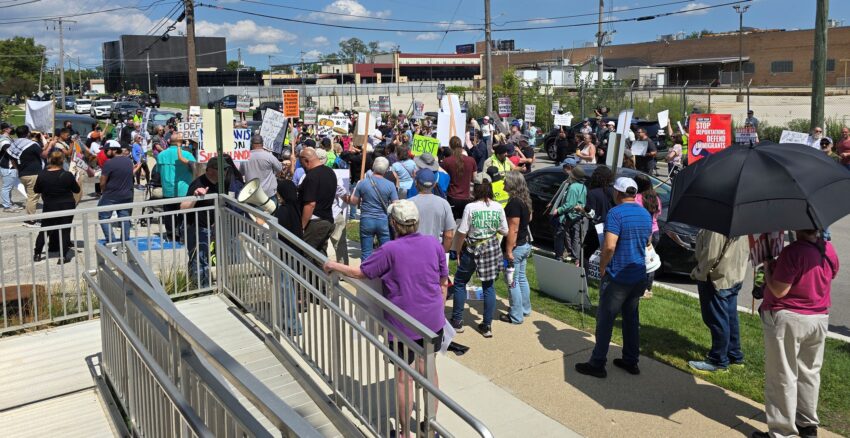
According to transcripts released from October grand jury sessions, some Chicago grand jurors expressed doubts to the Justice Department about indicting six Democratic politicians and activists who protested at a federal immigration detention center near the city.
A week after the grand jury had rejected the indictment, one juror questioned the prosecutors, asking if there was no limit to the number of attempts the Justice Department could make.
On Tuesday, a federal judge in Chicago permitted the release of multiple pages of transcripts from the October grand jury hearings in which the individuals known as the “Broadview Six” were indicted. The disclosure of such detailed grand jury records, illustrating prosecutor-grand juror interactions during case deliberations, is highly unusual.
Lately, complications arising from the Broadview Six grand jury proceedings have created significant challenges for the US Attorney’s Office in Chicago and its head, Andrew Boutros. Since the transcripts were released, defense lawyers and judges have increased their scrutiny of this case and others.
A judge previously criticized the conduct as inappropriate, pointing out during a May hearing that prosecutors had endorsed their own evidence and expressed personal opinions during deliberations. The judge also highlighted that a grand juror who planned to oppose the indictment was dismissed by prosecutors a week after the indictment did not pass last October.
Throughout the previous fall, the grand jury convened every Thursday to review cases brought by prosecutors. The Broadview Six case was presented to them three consecutive weeks in October, though attendance was not mandatory for all jurors at each session.
When a grand juror inquired about any new developments in the case, a prosecutor responded by acknowledging the juror’s skepticism and questioning whether they could remain open-minded.
According to the transcripts, one unnamed grand juror stated that they had heard the case the previous week and still considered it unconvincing.
The prosecutor subsequently dismissed the grand juror, a decision that raised concerns and ultimately led the US Attorney’s Office to end the session without holding another vote.
One week later, during their third session on the matter, the grand jury approved indictments against the Broadview Six.
Last month, following Judge April Perry’s review of the previously sealed grand jury transcripts, the US Attorney’s Office withdrew the charges against the Broadview Six.
In a statement Tuesday, Christopher Parente, representing one of the Broadview Six, argued that the transcripts show the grand jury tried multiple times to reject what he called a politically motivated indictment, and accused the DOJ of undermining the integrity of the grand jury process.
Ongoing consequences
The case has also prompted questions regarding the potential influence of Justice Department leadership on the Chicago office’s handling of the activists’ prosecution. Last week, acting Attorney General Todd Blanche publicly supported Boutros.
Nevertheless, according to transcripts, an assistant prosecutor told the grand jury in October that they were avoiding political considerations and focusing solely on the federal immigration law enforcement aspects of the case.
Over 100 former employees of the office, including prominent ex-federal prosecutors, released a statement Monday expressing concerns about leadership failures and the growing influence of political factors on prosecutorial choices.
Additionally, this week, defense attorneys in at least two other cases in the Northern District of Illinois referenced the Broadview Six grand jury controversy as grounds for judges to reassess prosecutors’ actions in unrelated criminal proceedings.
Boutros, who has highlighted his tough stance on prosecutions—particularly regarding gun offenses—also stated on social media yesterday that he has spent the past year implementing major reforms and improvements to the office.